
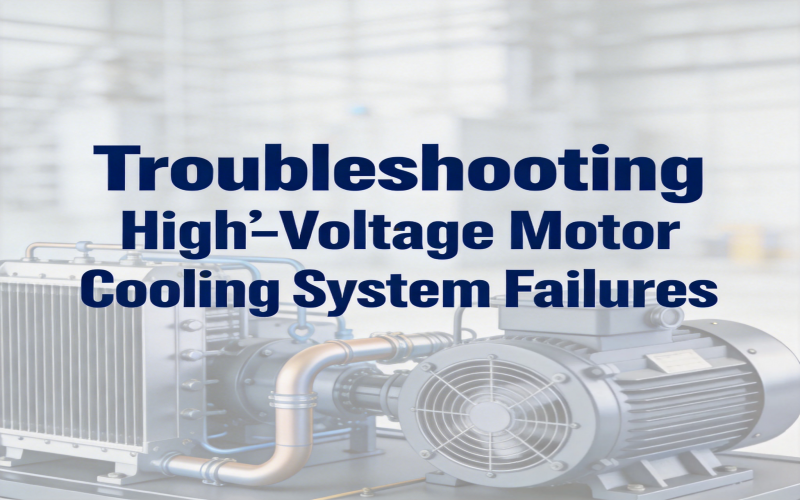
Complete guide to troubleshooting high-voltage motor cooling system failures. Covers temperature anomalies, water/air cooling checks, leak & blockage fixes, and daily maintenance to prevent overheating.
2026-09-04 ABB MOTOR 15
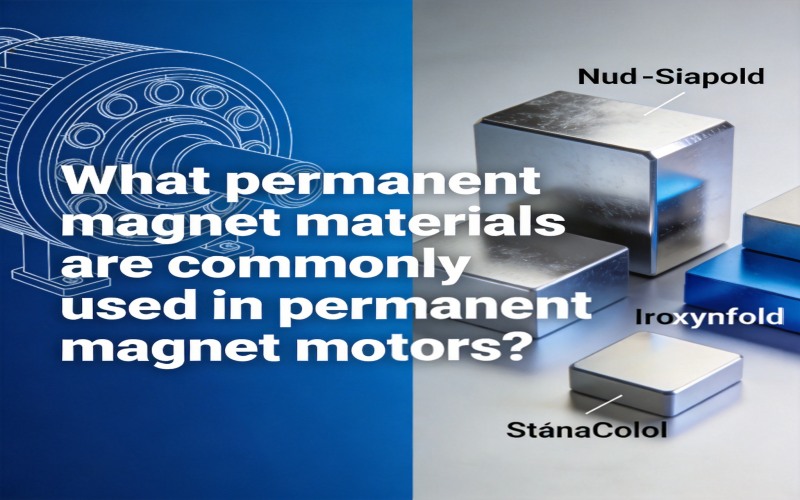
The most commonly used material in permanent magnet motors today is Neodymium Iron Boron (NdFeB). It has a very high energy product, which allows for strong magnetic fields, making motors smaller and more powerful. Ferrite permanent magnets are cheaper, but their magnetic performance is lower, so they are often used in low‑power or cost‑sensitive applications.
2026-08-15 ABB MOTOR 18
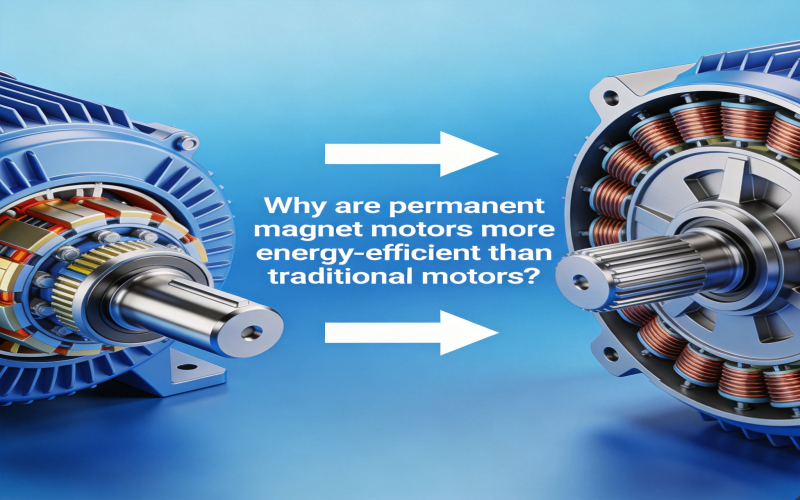
Traditional induction motors need to draw current from the power grid to generate a magnetic field. This current is called "excitation current" and it consumes electrical energy without doing useful work. In contrast, a permanent magnet motor has its own built-in permanent magnets on the rotor, so the magnetic field is provided by the magnets and no excitation current is required.
2026-08-14 ABB MOTOR 16
A frequency converter consists of four main parts: rectifier, DC link (intermediate DC circuit), inverter, and control circuit. The rectifier converts the mains AC into DC; the DC link filters and stores energy; the inverter, under the command of the control circuit, converts the DC back into AC with adjustable frequency and voltage for the motor.
2026-07-30 ABB MOTOR 31
Driving motors with frequency converters has become an irreversible trend. In practice, however, improper matching between the converter and the motor often leads to various issues.
2026-07-17 ABB MOTOR 60
A frequency converter (also called a variable frequency drive, VFD) is a power control device that converts a fixed‑frequency AC supply into an AC output with adjustable frequency and voltage. Most converters in use today adopt the AC‑DC‑AC conversion method (VVVF or vector control).
2026-07-16 ABB MOTOR 86
In industrial power distribution and equipment selection, calculating the rated current of a high‑voltage motor is a fundamental yet crucial task. Many engineers new to high‑voltage systems may think it is complicated, but in fact its core principle is the same as that for low‑voltage motors – it all comes down to power, voltage, and power factor.
2026-07-10 ABB MOTOR 95
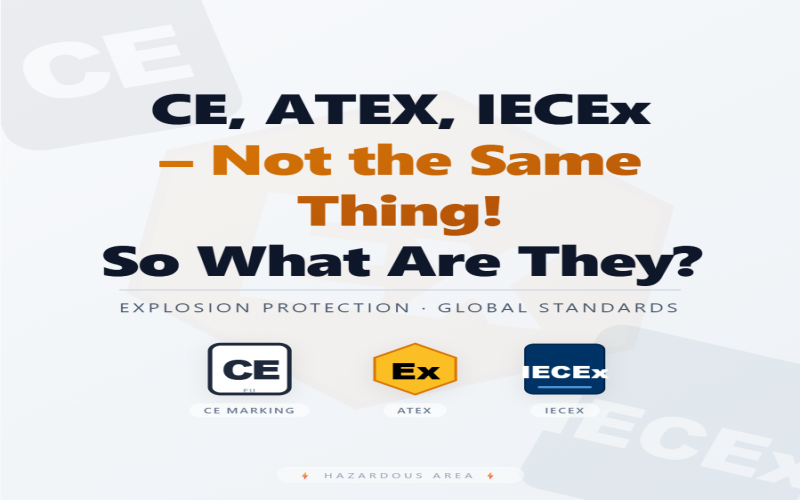
In short, CE marking is the “passport” for products to enter the EU market; ATEX is one of the specific regulations that explosive‑atmosphere equipment must satisfy to obtain that CE marking; and IECEx is an “international passport” designed for global mutual recognition.
2026-06-30 ABB MOTOR 83